from 28,000+ verified Mobypark parking reviews
28,000+ verified Mobypark reviews
Book parking with verified private owners and companies, including:





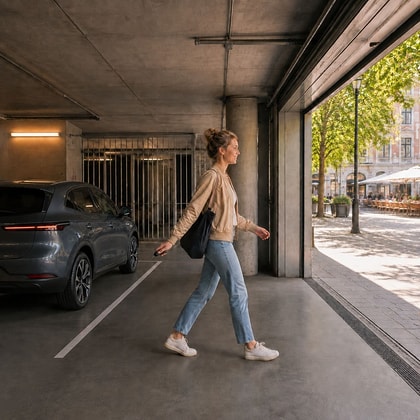
Finding parking near Heiligensee, Reinickendorf, Berlin
Parking Heiligensee: start with the street signs and time limits
If you’re searching for parking Heiligensee, begin by checking the local parking signs on the street you plan to use. In Berlin, parking rules are managed by zone and can change block by block, even in residential areas. If you’re going for street parking, note the maximum parking duration, payment method, and whether the space is reserved (e.g., residents/permits).
In Heiligensee, the area is largely residential, so spaces can be less scarce than in the city center—but you can still run into limits during busy periods. If you want to avoid hunting for short-stay spaces and you’re flexible about timing, you can check Mobypark for future availability in the Heiligensee area.
Resident permit parking (Bewohnerparken) and what it means for visitors
Berlin can allow resident permit parking in managed zones. A resident parking permit (“Bewohnerparkausweis”) typically applies to a specific zone and vehicle and can lift time limits and regular fees for residents. Visitors without a permit must follow the public signage rules for that exact street.
- Look for “Bewohner” / permit-only markings before you park.
- Assume the same curb can have different rules depending on the block.
- Keep your receipt/parking session active until you’re ready to leave (if the sign requires it).
Paid street parking and common payment options in Reinickendorf
Where parking is managed, fees depend on the specific zone. In Berlin’s pay-to-park areas, a typical example fee structure is around €0.50–€1.00 per 15 minutes, but your final price is determined by the sign for that location.
Common ways to pay include cash/coin, Girocard, credit cards, and mobile parking apps (e.g., PayByPhone-style services used across Berlin).
Garages near Heiligensee: when you want predictable parking
If you’d rather not manage changing street restrictions, park garages and covered parking can be a practical fallback—especially if you’re arriving for a longer stop.
One example listed in the wider area is Hallen am Borsigturm (Am Borsigturm 2, 13507 Berlin), which is a large, covered facility with frequent driver use. Before you go, double-check the current tariff and any payment rules at the entrance.
- Best for: longer stays or when you need an easier arrival than street parking.
- Watch for: payment preferences and whether the garage has a defined max duration for certain ticket types.
P+R options to reduce parking stress
If you’re driving in with public transport in mind, Park and Ride (P+R) can help. P+R facilities are designed for people to park at/near transit stops and continue by train or bus.
For the Heiligensee area, relevant P+R options in Reinickendorf can include:
- P+R Alt-Tegel
- P+R Wittenau
- P+R Kurt-Schumacher-Platz
P+R parking is often free or low-cost (many Berlin sites charge around €0.50–€1.50 per day, depending on the facility), so it’s commonly used when street availability is hit-and-miss.
Overstaying and violations: avoid the most common Reinickendorf ticket issues
In Berlin, exceeding the posted maximum parking duration or parking where it’s not allowed can lead to fines. For example, overstay enforcement can ramp up with time:
- Up to 30 minutes: around €20
- Up to 1 hour: around €25
- Up to 2 hours: around €30
- Up to 3 hours: around €35
- More than 3 hours: around €40
In more serious cases (e.g., blocking safety/traffic), vehicles can be towed (“abschleppen”). If that happens, costs can quickly reach the several-hundred-euro range once towing and administration are included.